
New Tank Syndrome is one of the most common
ways your aquarium’s water turns bad. And this is very bad news, because it can
kill your fish.
What is New Tank Syndrome (NTS)? NTS is a fish disease that affects
aquariums with a high level of ammonia. This happens when there’s a problem
with your nitrogen cycle.
If you’re worried about New Tank Syndrome as an
aquarium owner, that’s good. It means you’re responsible and care about your
fish. So we’re going to help you save your fish from NTS.
1. New Tank Syndrome 101
If you want to save your fish from New Tank
Syndrome, you need to understand it. It’s important to know what causes NTS,
how to recognize it, and what you can do to save your fish from it.
We’re going to help you with all of that in
this section.
NTS
Cause
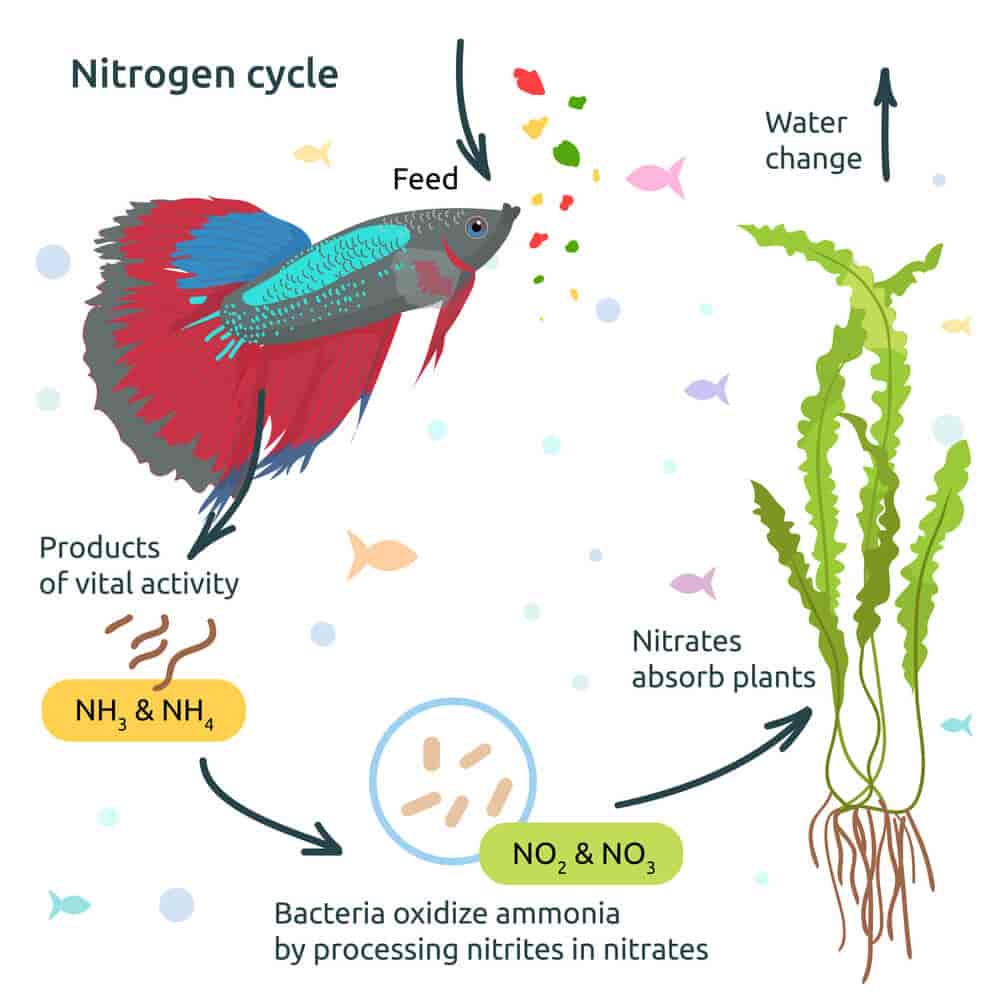
As part of your nitrogen cycle, ammonia is
formed when there’s waste in your aquarium. There are good bacteria in your biological filter media that feed on
the ammonia and turn them into nitrites.
New Tank Syndrome happens when there aren’t
enough of that bacteria.
This usually happens because you added fish to
your aquarium before the bacteria had a chance to grow. That’s why you should
rather start your nitrogen cycle before adding fish.
But NTS can also happen in mature aquariums. So
it isn’t only because you added fish to your tank too soon. Other reasons
include:
- You’re feeding your fish too much
and/or too often - There are too many fish in your
aquarium compared to your filter size - You haven’t used a de-chlorinator on
your water - You’ve been cleaning too much and
removing bacteria - Alternatively, you haven’t been
cleaning enough and your biological filter media is clogged - The water temperature and/or pH
level has changed a lot very quickly
How
to Recognize NTS in Your Aquarium
You can’t simply look at your tank and see that
there’s too much ammonia. It would be great if it were that easy, though!
Ideally, if you have an aquarium, you also have
a test kit. You should be testing
your tank water every couple of days to check on ammonia, nitrite, and nitrate levels. If you also have a pH
kit, then you should be using it too.
By testing properly, you’ll be able to prevent
NTS a lot better. We’ll take a look at ways to prevent NTS in the next section.
Your ammonia and nitrite levels should never be
more than 0.0ppm (parts per million). As soon as it becomes 1ppm, your fish
will start to develop NTS!
If your test kit is broken or you aren’t using
it, the only way you’re going to know that your fish are in danger of NTS is
when they start showing symptoms of ammonia poisoning. By that time, you need
to start doing treatment.
You can recognize NTS in your aquarium with
these symptoms:
- Your fish are gasping for air at the
surface - Your fish are moving very slowly or
not at all - They’re staying near to the bottom
of the tank - They have little or no appetite
- There’s inflammation of the anus,
eyes, or gills - You can see red streaks on your
fish’s fins or gills (these are bloody veins)
Treatment
of NTS
Remember we said your fish are in danger of NTS
as soon as your ammonia and nitrite levels reach 1ppm? If this happens, you
need to act very quickly.
- Your first step is to make sure your
filter is working properly. Accidents happen more often than we like to admit.
Maybe you forgot to plug it back in after cleaning. But maybe you haven’t been
cleaning enough and your filter is clogged! - Secondly, you should stop feeding
your fish for a few days. If they’re lethargic and not eating a lot, then any
food you put into your tank is just going to become waste. Waste is what
creates ammonia, so you’ll just be making the problem worse. - Third, you should change the water. Not all of it, of
course. But if you use water that has the same harness and temperature, then you
can change up to 90% at a time. Usually, you should only change 10% to 25%, but
NTS is an emergency case. - You should always make sure that you
add de-chlorinator to your water
before putting it into your tank. Chlorine will kill bacteria, which is the last
thing you want happening. - Last, but not least, you need to add
bacteria to your tank. A great way to do this is to use cycle products that are designed to boost bacteria growth.
BONUS:
2 More Quick Cures for NTS
Your fish are probably struggling to breathe
because of all the pollution in your tank. This is what leads to them gasping
for air at the surface.
There are two things you can do at this point.
- First,
you could add an air stone. This
will increase oxygen levels. Not only will your fish be able to breathe easier,
but bacteria too. That’s definitely a good thing. - The
other thing you can do is add aquarium
tonic salt. This will help to detoxify the nitrite in your tank.
If it’s a serious emergency, then your best
option is to move your fish into a tank that doesn’t have any problems. You
should keep them there until you’ve got your new aquarium’s nitrogen cycle
working again.
Even better, if you have two tanks, you should
have two filters running in both. If NTS happens, you can move one of the mature
filters into the problem tank. The bacteria in its biological filter media will
help to get rid of the ammonia and nitrites quicker.
2. Preventing New Tank Syndrome
Prevention is always better than the cure!
We’re sure you’ve heard that saying before. And it’s very true. So here are
some tips to help you prevent New Tank Syndrome.
Quick
Tips for NTS Prevention
- When buying a filter, choose one
that has a large biological capacity. Ideally, it should be rated for more than
the volume of your tank. But as long as it’s at least the right size for your
aquarium, you’ll be safe. - Always make sure that your filter is
operating 24/7 from the moment you put it in, to the moment you replace it. - Perform fishless cycling (see below)
before you add your first fish. - Use a filter from a mature aquarium
(or its filter media). - Never put too many fish into your
tank or add more fish too quickly. Ideally, you should only add one or two new
fish at a time. - Don’t feed your fish too much or too
often. - Never use water that hasn’t been
de-chlorinated first. - Never wash your filter media under a
tap! If you’re changing water at the same time, save the water you take out of
your tank. Wash your filter media in it instead.
Maturing
Your Tank: Fishless Cycling
The best way to mature your tank is to start
your nitrogen cycle without any fish in the aquarium. This is more human for
your fish because it doesn’t put them in danger. The process is called fishless
cycling.
Again, you need to have a test kit so you can
check ammonia, nitrite, and nitrate levels. Ideally, you should also use a pH test kit too.
Once your water, filter, and decorations (and
plants if you have any) are in your tank, you’re ready to start. Make sure
you’ve added de-chlorinator to the water and that the temperature is 77°F to 86°F (25°C to 30°C). Bacteria grow best at these temperatures.
Ideally, you want to use a cycling product that adds ammonia to your
tank. You should also be using one that adds bacteria. But another option is to
use plants, ornaments, gravel, and/or filter media from a mature tank for the
bacteria. You can throw some fish food into the tank to rot and start producing
ammonia if you can’t afford cycling products.
Ammonia levels should rise to 4ppm until nitrites start forming. You can
keep adding more ammonia to keep it at that level until the nitrite starts
becoming nitrate.
Once nitrates start appearing, you can let your ammonia and nitrite
levels start to drop to 0ppm. If your nitrate levels reach 40ppm, start
changing more water. They should be down to 20ppm before you add fish to your
aquarium.
Remember to keep an eye on your pH levels
too. They shouldn’t drop below 7, otherwise ammonia starts turning into
ammonium. The bacteria that feed on ammonia can’t feed on ammonium!
Starter
Fish
It’s not always possible to start maturing your
tank before you add fish. Maybe you’ve already bought both and don’t have
anywhere else to put your fish while waiting for the nitrogen cycle to start.
That’s okay. While it’s not ideal, you can
start the cycle with certain types of fish in the tank. These fish are called starter fish. They’re hardier than
other kinds of fish. At worst, they should only get a bit sick during the first
cycle.
Starter fish include:
- Banded Gourmis
- Cherry or Tiger Barbs
- Most guppies
- Most minnows
- Pseudotrophius Zebra
- Pupfish
- White Clouds
- Z-Ray Tetras
- Zebra Danios
You should only feed them every second day
until ammonia and nitrite levels drop to 0ppm. Once that happens, you can start
feeding them once a day. You’ll also be able to start adding other types of
fish.
Just remember to introduce new fish one or two
at a time!
3. Conclusion
New Tank Syndrome only happens in new tanks,
right?
Wrong. The exact same thing can happen in
mature tanks. When it does, we call it Old Tank Syndrome (OTS) instead. OTS is
very similar to NTS, so you should still test your water regularly.
By following the steps we gave you to prevent
NTS, you can also prevent OTS. But just in case, we’ll be adding an article on how to save your fish from Old
Tank Syndrome in the future!
Read the original article at :
How to Save Your Fish from New Tank Syndrome (Bonus 2 More Quick Cures)
source https://aquariapassion.com/new-tank-syndrome/


 aquariapassion